What Is Levain? Sourdough, Starters and Natural Leavening Explained
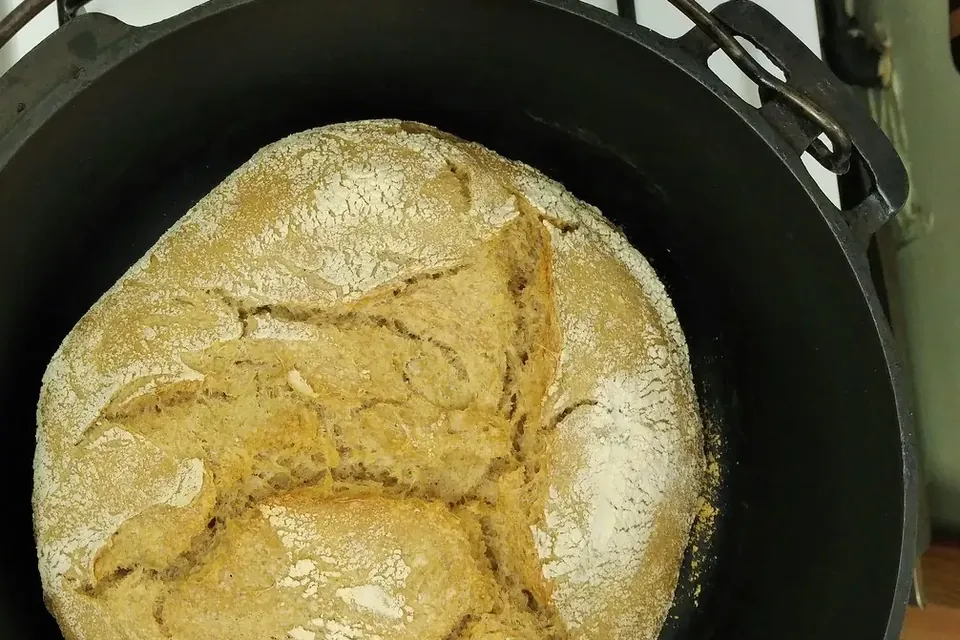
"Levain" is the French word for leaven, and in bakeries it means a dough or batter of flour and water that has been colonised by wild yeasts and bacteria and is used to raise bread. In English the bread made this way is usually called sourdough. The terms overlap, but knowing exactly what each one refers to makes recipes much easier to follow.
Starter, levain, sourdough: the vocabulary
Recipes use these words in slightly different ways, so it helps to fix them:
- Starter. A culture of flour and water, kept going indefinitely by regular feeding. Bakers also call it the mother, the chef or simply "the culture". Our guide to making and keeping a starter explains how to begin one.
- Levain. In most modern recipes, the levain is an intermediate step: a spoonful of starter is mixed with fresh flour and water a few hours before you make the dough, so that the culture is at its most active when you need it. In French baking tradition, pain au levain is simply bread raised by a natural leaven rather than by commercial yeast.
- Sourdough. The usual English word for both the bread and the culture. Not all sourdough bread is noticeably sour; many French-style levain loaves are mild.
- Hydration. The weight of water as a percentage of the weight of flour. A starter at 100% hydration has equal weights of flour and water; a stiff levain might be 50–60%.
What lives in a levain
A healthy culture is a stable community of two kinds of microbes. Yeasts ferment sugars and produce carbon dioxide and ethanol; the gas, trapped in the gluten network, is what makes the dough rise. Lactic acid bacteria (LAB) ferment sugars too, producing lactic acid and, in some species, acetic acid. These acids lower the pH of the dough, which gives sourdough its tang, discourages spoilage organisms and affects the gluten.
Research on hundreds of household starters has shown how varied these communities are. A 2021 study published in the journal eLife, which analysed some 500 starters sent in by home bakers, mainly in North America and Europe, found that the yeast Saccharomyces cerevisiae (the same species as baker's yeast) was the most common, alongside other species, and that bacteria from the group formerly called Lactobacillus dominated. The geography of the starter turned out to matter less than many bakers assume; how it was made and maintained mattered more. The popular idea that a city such as San Francisco has a unique sourdough microbe is only partly true: the bacterium named after that city, now called Fructilactobacillus sanfranciscensis, is found in starters all over the world.
Where the flavour comes from
Sourdough's taste is mostly the product of the acids made by bacteria, plus aroma compounds made by both yeasts and bacteria during the long fermentation and by the Maillard reactions that brown the crust. Bakers steer that flavour with a few levers:
| Lever | Milder, more lactic | Sharper, more acetic |
|---|---|---|
| Temperature | Warm (about 26–28°C / 79–82°F) | Cool (below about 21°C / 70°F), including a cold retard in the fridge |
| Levain hydration | Liquid levain (100% or more) | Stiff levain (50–60%) |
| Flour | White bread flour | A share of whole wheat or rye |
| Timing | Levain used at its peak | Levain used after its peak, or a long overnight proof |
These are tendencies rather than rules; each culture behaves a little differently. Keep notes, change one thing at a time, and you will learn your starter's habits.
What acidity does to the bread
The acids in sourdough do more than add flavour. They slow the staling of the crumb and help keep mould at bay, which is one reason naturally leavened breads were traditional in places without daily access to fresh yeast. Acidity also changes how gluten behaves: a moderately acidic dough is stronger and more elastic, while an over-fermented, very acidic dough becomes slack and sticky. That is why recipes stress using the levain at the right moment.
Rye flour reacts differently. Rye has little gluten-forming protein, and its structure depends on other components (pentosans) and on starch. Rye flour also contains active enzymes that can break starch down too far in a neutral dough. Acidification keeps those enzymes in check, which is why rye breads in northern and eastern Europe have long been made with a sour culture. Our rye levain loaf recipe puts this into practice.
Is sourdough easier to digest?
You will often read that sourdough is healthier or easier to digest. The honest answer is that long fermentation does change the dough. Studies have found that it can reduce phytic acid, a compound in wholegrain flours that binds minerals, and can break down some of the fermentable carbohydrates (FODMAPs, including fructans) that cause symptoms in some people with irritable bowel syndrome. Results depend heavily on the recipe and fermentation time, and many supermarket loaves labelled "sourdough" are made largely with commercial yeast.
What sourdough does not do is make wheat safe for people with coeliac disease. Fermentation by ordinary starters does not remove gluten to a safe level, and gluten-free status depends on ingredients and testing, as the US Food and Drug Administration's gluten-free labelling rules explain. If you have a medical condition, follow your doctor's or dietitian's advice.
Levain versus commercial yeast
Commercial yeast is a single, highly active strain of Saccharomyces cerevisiae grown for speed and predictability. A loaf made with it can go from mixing to oven in three or four hours. A levain loaf usually takes a day or more from feeding the starter to baking, because wild cultures are slower and the bacteria need time to work. The trade-off is flavour, keeping quality and the satisfaction of a bread made from flour, water, salt and time. Many bakers keep both: a starter for weekend loaves and a packet of yeast for weeknight pizza.
Where to go next
- Start a culture: how to make and keep a sourdough starter.
- Bake your first loaf: a country levain loaf, step by step.
- Bake through the cold months: levain in a Minnesota winter kitchen.
Sources
- Landis, E. A. et al. (2021), "The diversity and function of sourdough starter microbiomes", eLife 10:e61644.
- US Food and Drug Administration: Gluten and food labeling.
- US Department of Agriculture: FoodData Central, for the composition of flours and breads.
 Bread & levain
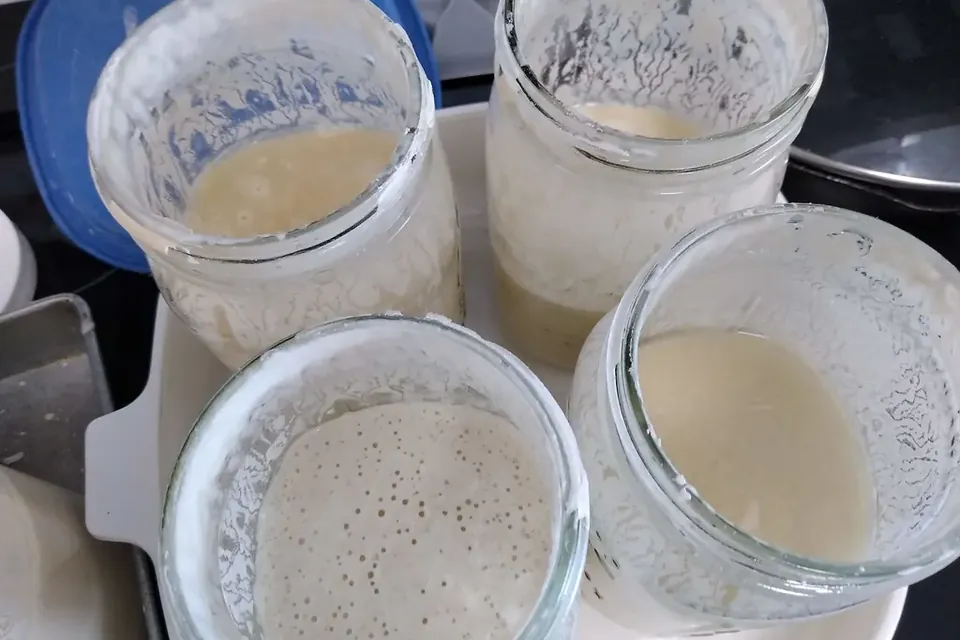
Make and keep a sourdough starter
Flour, water, a jar and about a week: a day-by-day method, signs of readiness and fixes for a sluggish culture.
 Recipes
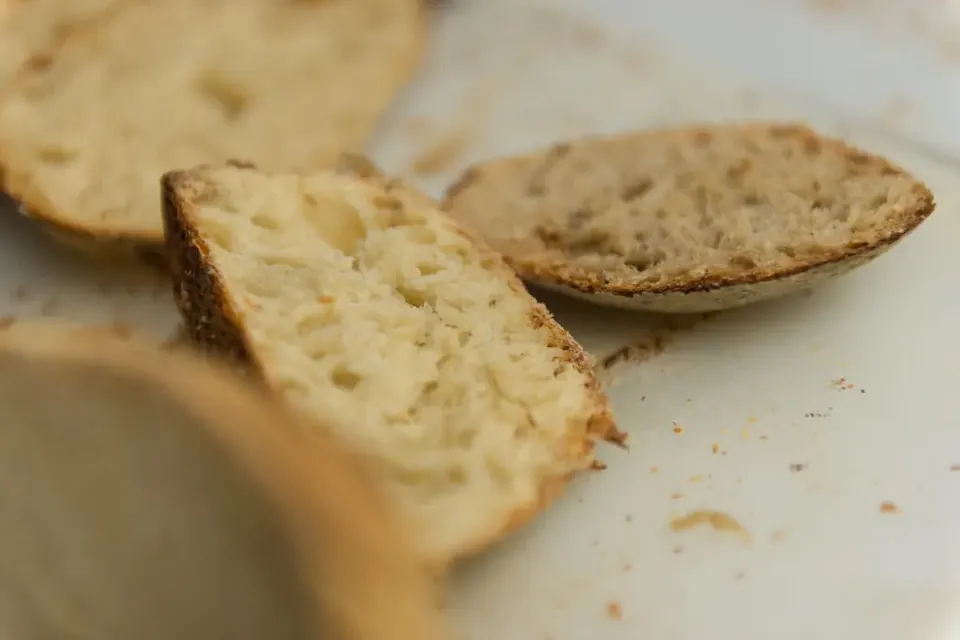
Country levain loaf
Bread flour, a little whole wheat, water, salt and levain: a two-day timetable and every step explained.
 Bread & levain
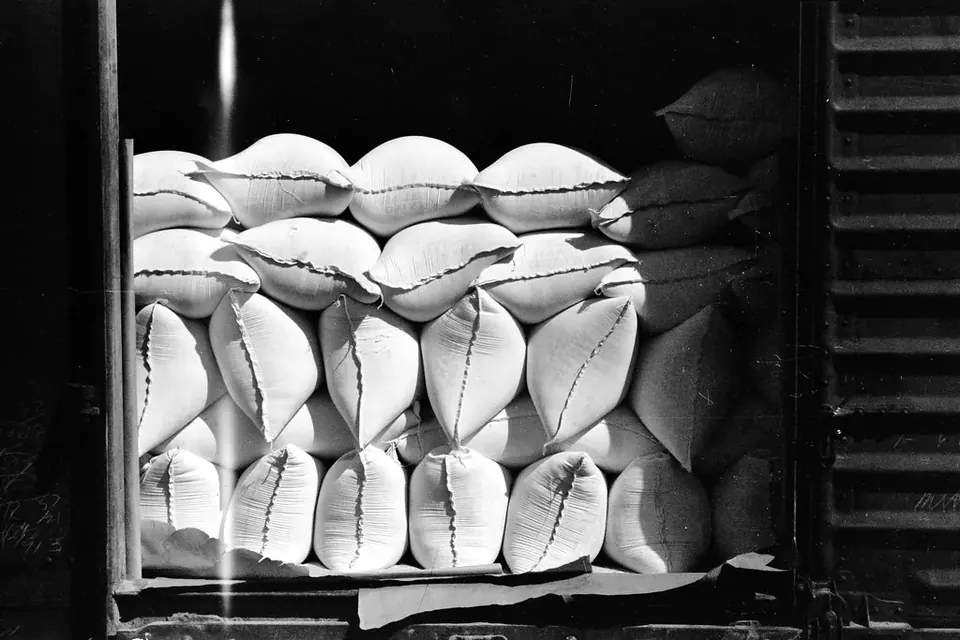
Minnesota wheat and flour
Spring wheat, protein percentages, whole grain and Kernza: how to read a bag of flour before you bake.