Rye Levain Loaf: A 40% Rye Sourdough Baked in a Tin
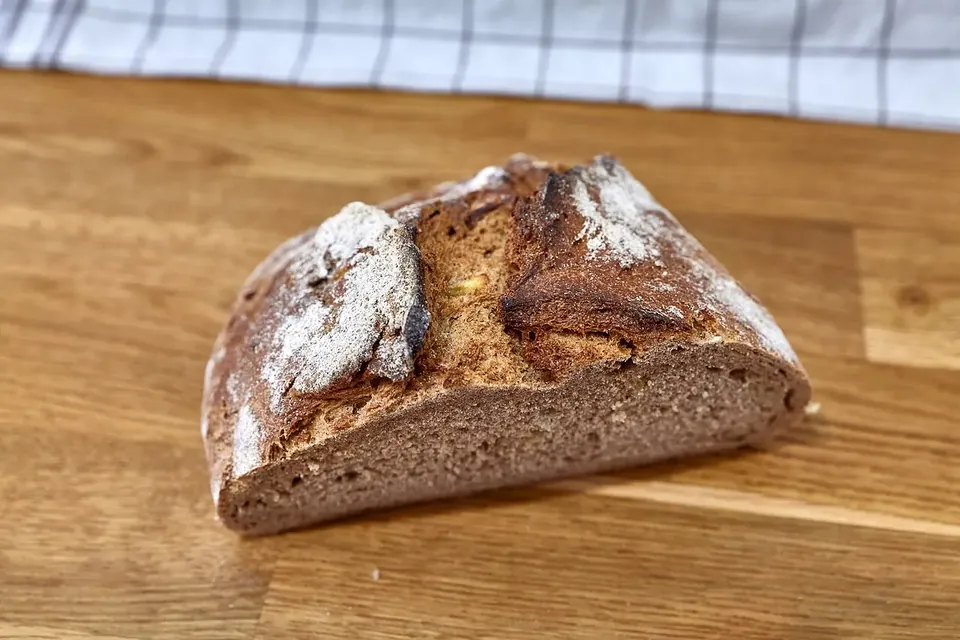
Rye breads came to Minnesota with the Scandinavian, German, Polish and other central and eastern European families who settled the state, and they remain a fixture of the region's delis and bakeries. This recipe is a gentle introduction: 40% whole rye flour and 60% wheat, raised with a rye sour and baked in a tin, so it is easy to slice for sandwiches.
- Makes1 tin loaf, about 1 kg
- Active timeabout 30 minutes
- Total timeabout 20 hours, plus resting
- Tin23 × 13 cm (9 × 5 in)
Why rye behaves differently
Wheat dough holds gas in a stretchy gluten network. Rye flour contains proteins that form very little gluten; instead, its structure comes from starch and from gummy carbohydrates called pentosans that absorb a lot of water. Rye also contains active amylase enzymes that break starch down. If those enzymes act too strongly during baking, the crumb turns gummy and can separate from the crust. Acidity slows them down, which is why rye breads have traditionally been made with a sour culture, as our guide to what levain is explains. In practice that means three things for the baker: use a well-fermented rye sour, expect a sticky dough, and do not rush the cooling.
Ingredients
Rye sour (the night before)
- 15 g active sourdough starter (any flour)
- 100 g whole rye flour
- 100 g water at about 27°C (80°F)
Dough
- All of the rye sour (about 215 g)
- 100 g whole rye flour
- 300 g bread flour
- 290 g water at about 30°C (86°F)
- 10 g fine salt
- Optional: 1–2 teaspoons caraway seeds, lightly crushed, and 1 tablespoon honey or molasses
In total that is 500 g flour, of which 200 g (40%) is rye, and 390 g water (78%). Butter or oil for the tin.
Method
- Build the rye sour. Mix the starter, 100 g rye flour and 100 g warm water into a thick paste. Cover and leave for 12–16 hours at room temperature. It should be domed, cracked on top and smell distinctly sour.
- Mix. Put all the dough ingredients, including the sour, in a large bowl. Mix with a stiff spatula or a wet hand for 4–5 minutes until uniform. The dough will be sticky and paste-like: that is correct. Do not add more flour.
- Bulk fermentation. Cover and leave for 1½ to 2 hours at about 24–26°C (75–79°F). The dough will puff slightly and show a few bubbles. Rye doughs with this much acid do not need a long bulk.
- Shape. Butter the tin. Wet your hands and the counter, scrape the dough out, pat it into a rough rectangle and roll it into a log the length of the tin. Drop it in seam-side down and smooth the top with a wet hand or spatula. Dust the top lightly with rye flour if you like the cracked look.
- Proof. Cover and leave at room temperature for 1 to 2 hours, until the dough has risen by about a quarter to a third and small cracks or pinholes appear in the floured surface. Rye over-proofs quickly, so start checking early. Preheat the oven to 240°C (465°F) during the last 45 minutes.
- Bake. Put the tin in the oven and, if you can, add steam by pouring a cup of hot water into a preheated tray on the bottom shelf (keep your face and hands away from the steam). After 15 minutes, reduce to 210°C (410°F) and bake for another 35–40 minutes. The internal temperature should reach about 96–98°C (205–208°F).
- Cool and rest. Turn the loaf out onto a rack. Let it cool completely, and ideally rest it wrapped in a tea towel for 6–12 hours before slicing. Slicing a warm rye loaf gives a sticky crumb.
Variations
- Darker rye. Increase the rye to 60% (300 g rye, 200 g bread flour) and the water to about 82%. The dough becomes even more paste-like and the proof shorter.
- Seeded. Soak 80 g of sunflower seeds and 20 g of flax seeds in 100 g of boiling water while the sour ferments, and mix them in with the dough.
- Scald. For a sweeter, moister loaf, pour 100 g of boiling water over 50 g of the dough's rye flour, stir, cover and leave overnight, then use it in the mix (reduce the dough water by 100 g).
- 100% rye. All-rye breads are a different discipline, often made in several stages with a very sour culture and rested for a day before slicing. Master this 40% loaf first.
Troubleshooting
| Problem | Likely cause | Try |
|---|---|---|
| Gummy streak under the crust | Under-baked, or sliced too warm | Bake to 96°C internal; rest longer |
| Large hollow under the top crust | Over-proofed, or rolled with trapped air | Shorten the proof; smooth the top firmly |
| Flat, sunken top | Over-proofed | Bake as soon as small cracks appear |
| Bland flavour | Young sour | Let the sour ferment longer, or add caraway |
Serving and storing
Rye bread keeps better than wheat bread because of its moisture and acidity. Wrapped in a cloth or paper bag, it is good for four to five days; sliced and frozen, for a couple of months. Serve it thinly sliced with butter, smoked fish, cheese, pickles, or alongside a bowl of wild rice soup.
Safety
- Steam from a hot tray can scald: pour quickly and step back.
- Rye contains gluten-forming proteins and is not suitable for people with coeliac disease.
- Do not taste raw dough (FDA advice).
Sources and further reading
- USDA: FoodData Central, for the composition of rye and wheat flours.
- US Food and Drug Administration: Gluten and food labeling.
- Our guides to wheat and flour and keeping a starter.
 Recipes
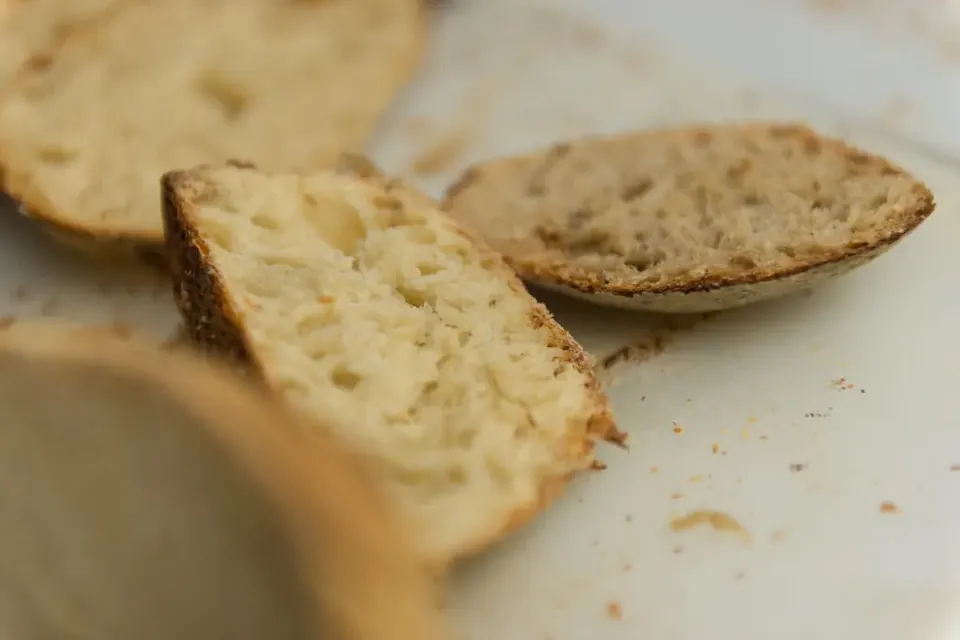
Country levain loaf
Bread flour, a little whole wheat, water, salt and levain: a two-day timetable and every step explained.
 Bread & levain
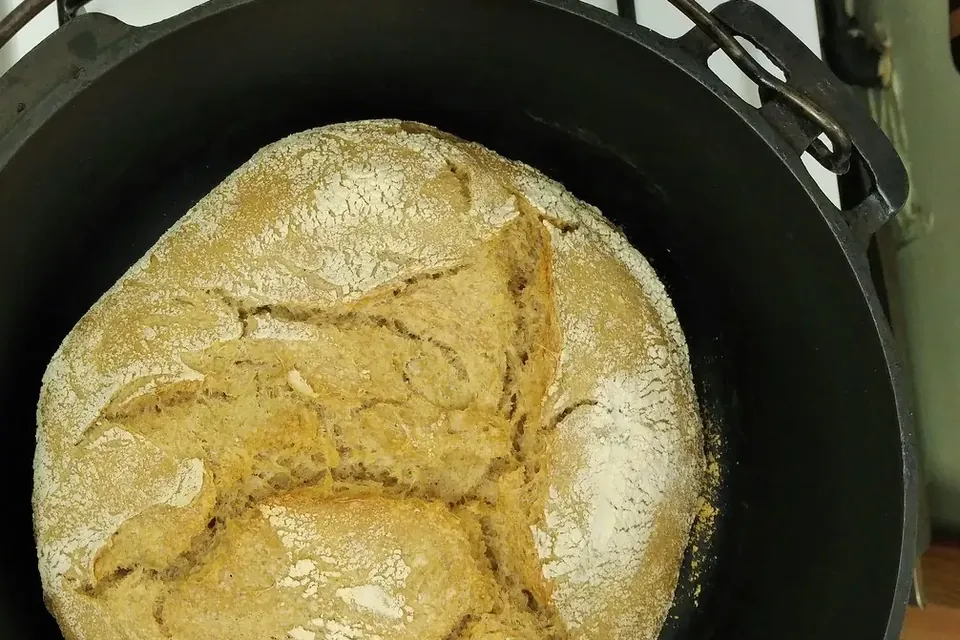
What is levain?
Starter, levain, sourdough: what the words mean, what the microbes do and why the bread tastes the way it does.
 Bread & levain
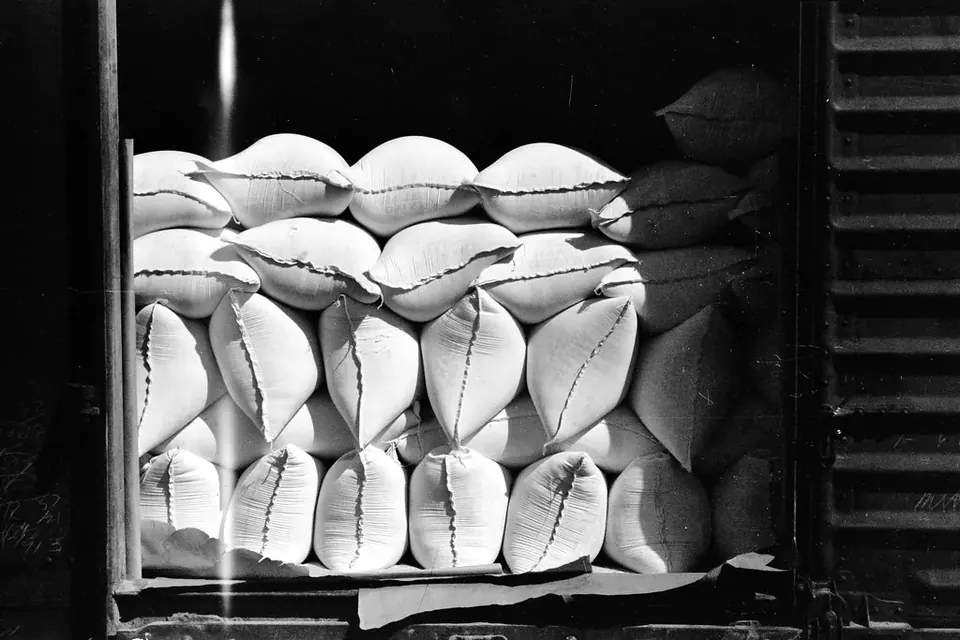
Minnesota wheat and flour
Spring wheat, protein percentages, whole grain and Kernza: how to read a bag of flour before you bake.