How to Make and Keep a Sourdough Starter: A Day-by-Day Method
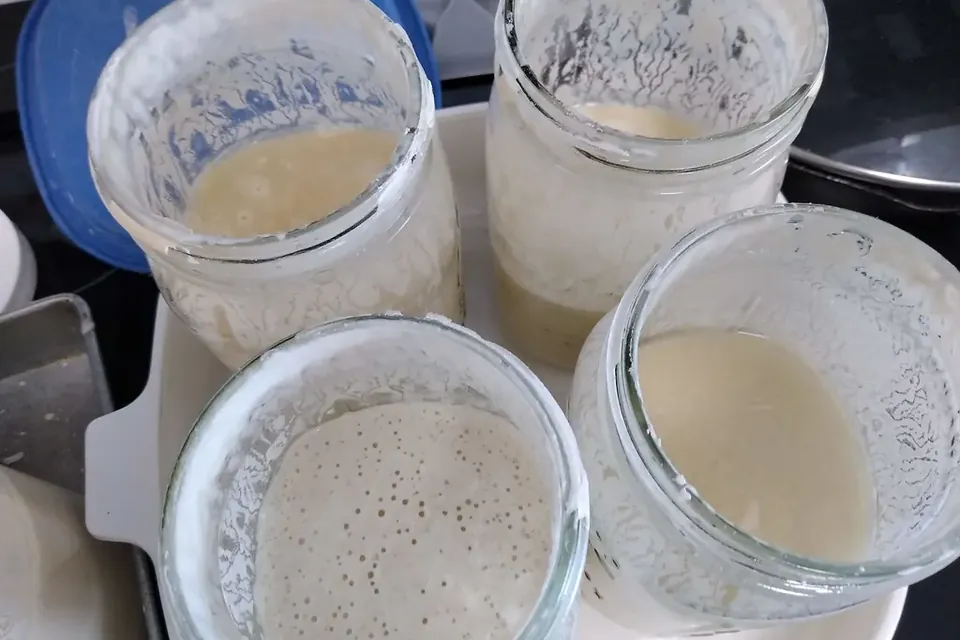
A sourdough starter is nothing more than flour and water that you feed regularly until wild yeasts and lactic acid bacteria settle into a stable, lively community. You do not need grapes, potato water or a packet of anything. You need decent flour, a jar, a kitchen scale and about a week of short daily attention.
What you need
- A clear jar of about 1 litre (1 quart), so you can see the rise. Put a rubber band or a strip of tape at the level after each feeding.
- A digital kitchen scale. Weighing is far more consistent than cups for flour.
- Flour. Whole wheat or whole rye flour starts fastest, because the bran and germ carry more microbes and nutrients. Once the culture is going you can switch to white bread flour or all-purpose flour, or keep a share of whole grain.
- Water. Tap water is usually fine. If yours is strongly chlorinated, leave it in an open jug for a few hours, or use filtered water.
- A warm spot. Somewhere around 24–26°C (75–79°F) is ideal. In a cold Minnesota kitchen, see our tips for keeping a culture warm in winter.
The day-by-day method
The quantities below are small to limit waste. "Discard" means removing part of the culture before feeding so that it does not grow endlessly and so that the fresh flour has a real effect.
- Day 1. In the jar, mix 50 g whole wheat or rye flour with 50 g lukewarm water (about 27°C / 80°F) into a thick paste. Scrape down the sides, cover loosely and leave in your warm spot for 24 hours.
- Day 2. You may see a few bubbles, or a lot. Add 50 g flour and 50 g water, stir well, cover and leave for 24 hours.
- Day 3. Discard all but 50 g of the mixture. Feed with 50 g flour and 50 g water. Many starters rise dramatically around now and smell yeasty or even unpleasant. This early burst is often driven by bacteria that do not last; do not be fooled into thinking the starter is ready.
- Days 4 to 6. Activity often drops, sometimes to almost nothing. This is normal as the culture becomes more acidic and the wild yeasts and lactic acid bacteria take over. Keep discarding to 50 g and feeding 50 g flour and 50 g water once a day, or twice a day if it is very warm.
- Day 7 onward. Switch to twice-daily feedings, about 12 hours apart: keep 25 g of starter and feed it 50 g flour and 50 g water (a 1:2:2 ratio). You can now use half white flour and half whole grain. Mark the level each time.
- Ready. When the starter at least doubles within 4 to 8 hours of feeding, has a domed, bubbly surface at its peak, smells pleasantly sour (like yoghurt or a mild vinegar) and does this for several days in a row, it is ready to bake with. For many kitchens that is between day 7 and day 14.
How to tell a healthy starter
| Sign | What it means |
|---|---|
| Doubles or more, domed surface | Active and near its peak: the best moment to build a levain. |
| Risen then fallen, streaks on the jar | Past its peak and hungry. Feed it; use it again at the next peak. |
| Grey or brown liquid on top | "Hooch", a sign of hunger. Stir it in for more tang or pour it off, then feed. |
| Smells of acetone or nail varnish | Very hungry. Feed more often, or with a higher ratio of fresh flour. |
| Pink, orange or fuzzy patches | Contamination. Throw it away and start again with a clean jar. |
The float test (dropping a spoonful in water to see if it floats) is popular, but it can mislead with whole-grain or liquid starters. The rise in the jar is a better guide.
Keeping a starter between bakes
If you bake every day, keep the starter at room temperature and feed it once or twice a day. Most home bakers bake once a week or less, so the fridge is the better home:
- Fridge. Feed the starter, leave it at room temperature for an hour or two, then refrigerate. Feed it about once a week. To bake, take it out a day ahead and give it one or two feedings at room temperature until it peaks reliably again.
- Stiff storage. A stiffer starter (about 50–60% hydration, a dough rather than a batter) keeps longer in the fridge between feedings.
- Back-up. Spread a thin layer of active starter on baking paper, let it dry completely at room temperature, crumble it and store it in an airtight jar. It can be revived with flour and water over a few days. Freezing a small portion also works.
Using the discard
Discarded starter is just fermented flour and water, so it can go into pancakes, crackers, flatbreads and waffles, where it adds flavour rather than lift. Because it contains raw flour, it should be cooked thoroughly: the US Food and Drug Administration advises against eating raw dough or batter because flour is a raw agricultural product that can carry harmful bacteria (FDA). Keep discard in the fridge and use it within about a week.
Troubleshooting
- Nothing happens after several days. Move it somewhere warmer, use some whole rye or whole wheat flour, and check that your water is not heavily chlorinated.
- It rose on day 2, then died. Normal. Keep feeding on schedule; the stable culture usually appears a few days later.
- It rises but very slowly. Feed twice a day at a higher ratio (1:3:3 or 1:5:5) for a few days to dilute the acid and give the yeasts more food.
- It is runny and never domes. Reduce the water slightly, or use more bread flour, which absorbs more water.
- The bread is dense. The starter may not have been at its peak. Build a levain and use it when it has doubled, as in our country levain loaf.
Food safety basics
- Use clean jars and utensils, and wash hands before handling.
- Discard any starter with pink, orange or fuzzy mould; do not try to save it.
- Bake or cook anything made with starter; do not taste raw dough.
Sources
- US Food and Drug Administration: Handling flour safely.
- Landis, E. A. et al. (2021), "The diversity and function of sourdough starter microbiomes", eLife.
- University of Minnesota Extension: food safety at home.
 Bread & levain
What is levain?
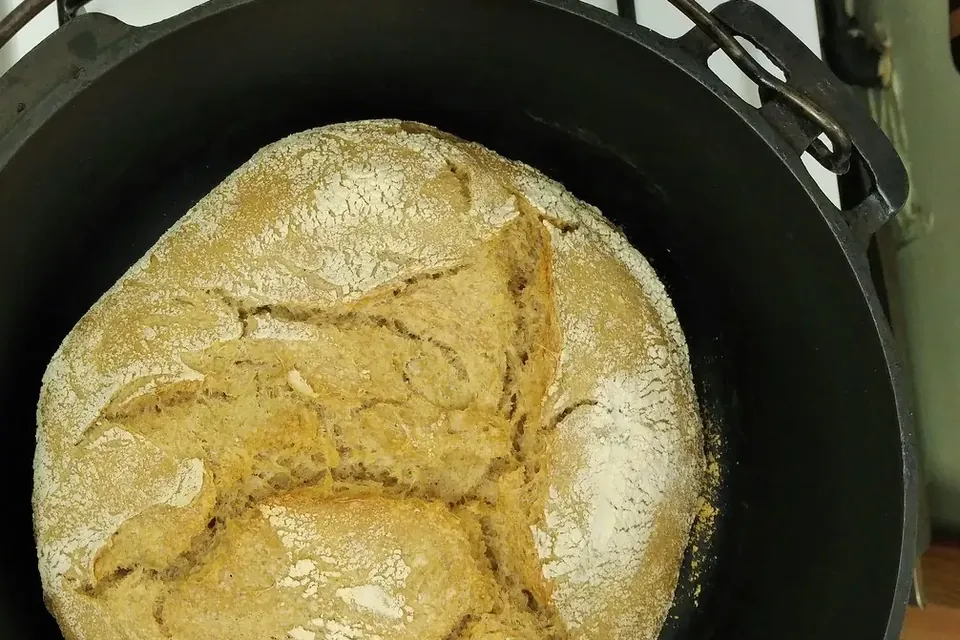
Starter, levain, sourdough: what the words mean, what the microbes do and why the bread tastes the way it does.
 Recipes
Country levain loaf
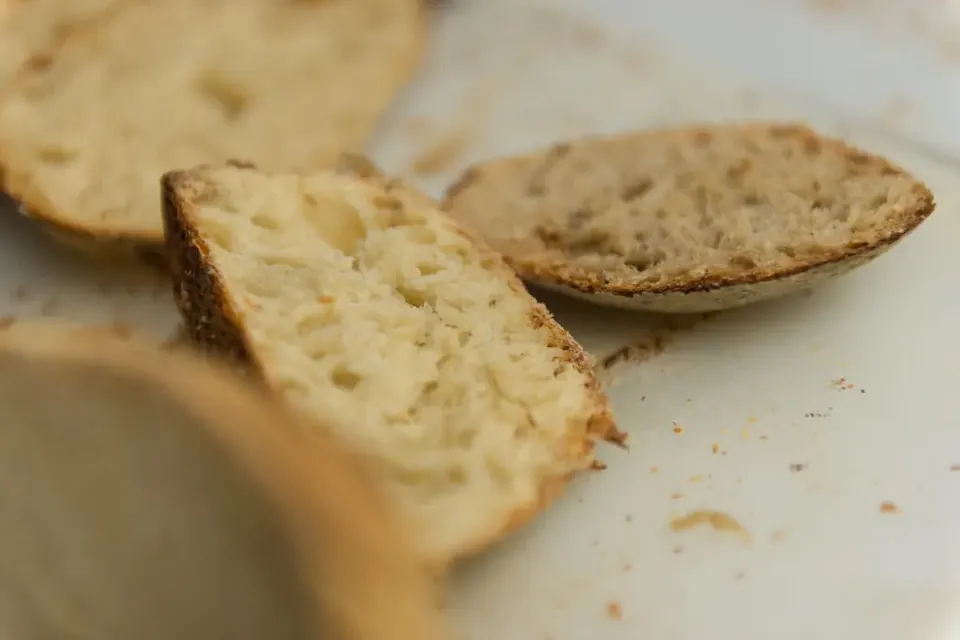
Bread flour, a little whole wheat, water, salt and levain: a two-day timetable and every step explained.
 Bread & levain
Levain in a cold winter kitchen
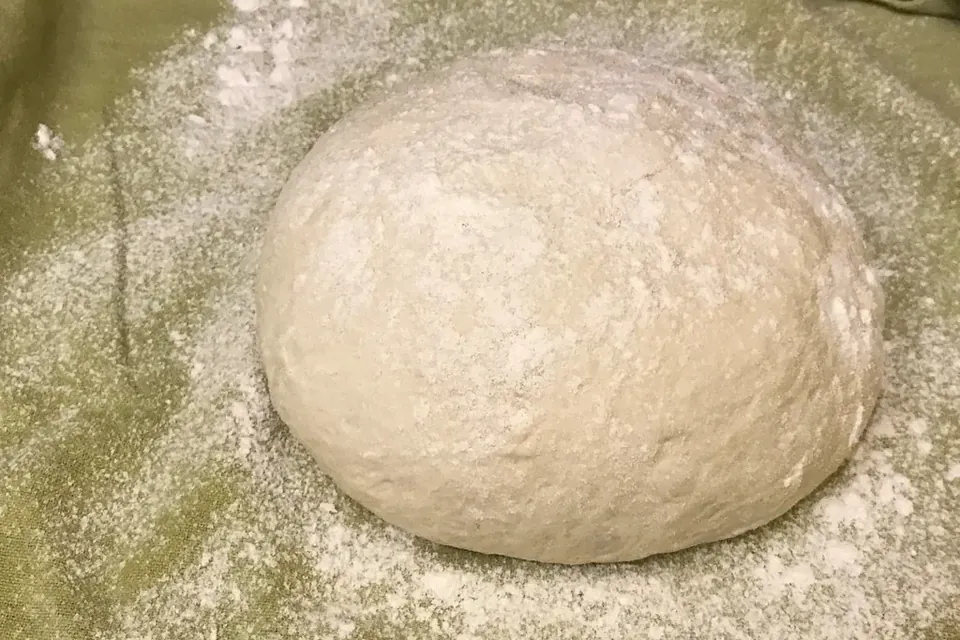
Desired dough temperature, warm spots that are safe, and how to stretch or shorten fermentation when the house is at 65°F.