Country Levain Loaf: A Step-by-Step Sourdough Recipe for Home Ovens
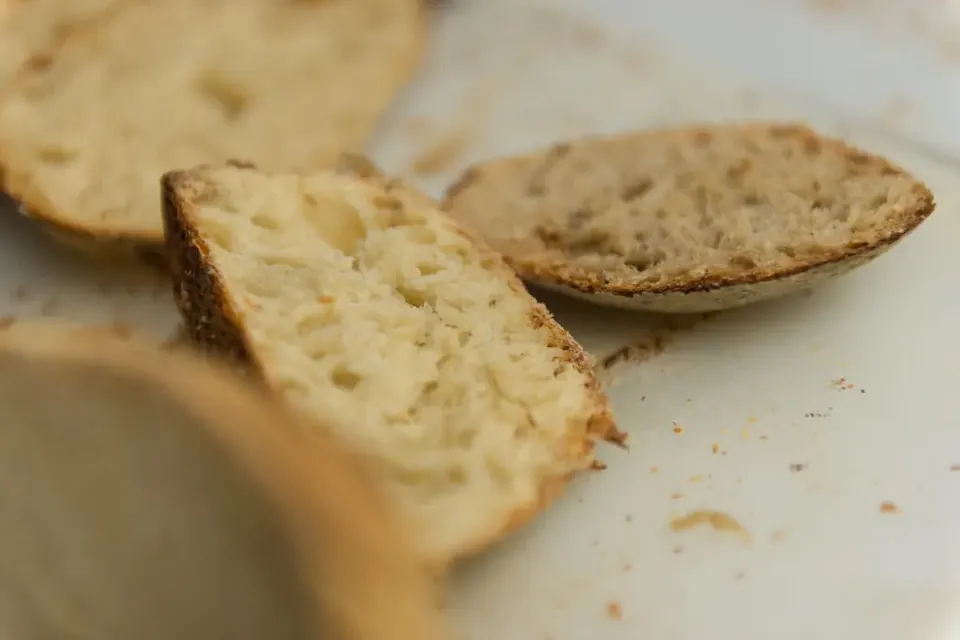
This is a straightforward country loaf: mostly white bread flour with a little whole wheat, about 75% water, raised only with a levain. It is the bread to learn first, because every step teaches you something you will use in every other levain recipe. Plan on two days, most of it waiting.
- Makes1 loaf, about 900 g
- Active timeabout 40 minutes
- Total timeabout 24 hours
- Hydration75%
Ingredients
Weigh everything; cup measures of flour vary too much for bread. Baker's percentages, in brackets, are relative to the total flour, so you can scale the recipe.
Levain (the night before)
- 20 g active sourdough starter (see how to make one)
- 50 g bread flour
- 50 g water at about 27°C (80°F)
Dough
- 450 g unbleached bread flour, about 12–13% protein (90%)
- 50 g whole wheat flour (10%)
- 365 g water, plus 10 g reserved (75% in total)
- 100 g levain (20%)
- 10 g fine salt (2%)
Rice flour or semolina for the banneton, if you have one. You will also need a large bowl or straight-sided container, a bench scraper, a proofing basket or a bowl lined with a floured tea towel, a sharp blade for scoring, and a lidded cast-iron or ceramic pot that is safe at 250°C (480°F).
Timetable
| When | Step |
|---|---|
| Day 1, 9 p.m. | Build the levain |
| Day 2, 8 a.m. | Mix flour and water (autolyse) |
| 9 a.m. | Add levain and salt |
| 9 a.m. to about 1 p.m. | Bulk fermentation with four sets of folds |
| About 1 p.m. | Pre-shape, rest, shape |
| About 2 p.m. to the next morning | Cold proof in the fridge |
| Day 3, morning | Bake |
These timings assume a kitchen at about 24°C (75°F). In a cooler kitchen, bulk fermentation will take longer; see our guide to baking levain in winter.
Method
- Build the levain. In a small jar, stir together 20 g starter, 50 g bread flour and 50 g warm water. Cover and leave at room temperature for 10–12 hours. It is ready when it has roughly doubled, the surface is domed and bubbly, and it smells pleasantly sour.
- Autolyse. In a large bowl, mix 450 g bread flour, 50 g whole wheat flour and 365 g water at about 30°C (86°F) until no dry flour remains. Cover and rest for 45–60 minutes. This rest lets the flour hydrate and gluten begin to form on its own, so less kneading is needed.
- Add levain and salt. Add 100 g levain and pinch and squeeze it through the dough until evenly distributed. Sprinkle over the salt with the reserved 10 g water and squeeze again, then fold the dough over itself for a minute or two until it feels cohesive. Note the time: bulk fermentation starts now. Ideally, the dough temperature is 24–26°C (75–79°F).
- Stretch and fold. Every 30 minutes for the first two hours, do one set of folds: with a wet hand, lift one side of the dough, stretch it up until you feel resistance and fold it over the middle; turn the bowl a quarter and repeat four times. After the fourth set, leave the dough alone.
- Judge the end of bulk. Bulk fermentation usually takes 4–5 hours from adding the levain at 24°C. The dough is ready when it has grown by about 50–75%, has a domed, slightly jiggly surface with some bubbles, and feels airy rather than dense. Go by these signs rather than the clock.
- Pre-shape. Turn the dough onto an unfloured counter. With a bench scraper, gently round it into a loose ball by pushing and turning. Leave uncovered for 20–30 minutes; it will relax and spread.
- Shape. Lightly flour the top, flip it over, and fold it into a tight round (boule) or oval (bâtard): fold the bottom third up, the sides in, then roll it towards you from the top, building surface tension. Place it seam-side up in a floured proofing basket.
- Cold proof. Cover the basket (a reusable bag works) and refrigerate for 12–16 hours. The cold slows fermentation, develops flavour and firms the dough so it is easier to score.
- Preheat. Put the lidded pot in the oven and preheat to 250°C (480°F) for 45 minutes to an hour.
- Score and bake. Turn the dough out onto a piece of baking paper, seam-side down. With a razor blade or very sharp knife held at a shallow angle, make one confident slash about 1 cm (1/2 inch) deep along the length. Using oven gloves, lower the dough on its paper into the hot pot, cover and bake for 20 minutes. Remove the lid, reduce to 230°C (450°F) and bake for another 20–25 minutes, until deeply browned.
- Check and cool. The loaf should sound hollow when tapped underneath; an internal temperature of about 96–99°C (205–210°F) confirms it is baked through. Cool on a rack for at least an hour: the crumb is still setting, and cutting too early makes it gummy.
Troubleshooting
| Problem | Likely cause | Try |
|---|---|---|
| Dense, tight crumb with a few big holes | Under-fermented bulk | Let bulk run longer; check dough temperature |
| Flat loaf that spreads | Over-fermented, or weak shaping | End bulk earlier; build more tension when shaping |
| Very sour | Levain past its peak, or long cool ferment | Use the levain at its peak; shorten the cold proof |
| Pale crust | Oven or pot not hot enough | Preheat longer; bake uncovered a little longer |
| Sticks to the basket | Not enough flour | Dust with rice flour, which absorbs less water |
Variations
- More whole grain. Replace up to 30% of the bread flour with whole wheat, and add 15–25 g more water. Expect a faster bulk.
- Seeds. Soak 75 g of mixed seeds (sunflower, flax, sesame) in an equal weight of boiling water, cool, and add after the second set of folds. Or roll the shaped loaf in seeds before it goes into the basket.
- Kernza or local flour. Swap 10–20% of the flour for Kernza or a stone-ground regional flour (see our flour guide).
Storing the bread
Keep the loaf cut-side down on a board, or in a paper or cloth bag, for two to three days. For longer storage, slice and freeze it in a sealed bag, then toast slices straight from the freezer. Avoid the refrigerator for bread: it speeds up staling.
Safety
- A pot at 250°C causes serious burns: use dry, thick oven gloves and lower the dough on baking paper.
- Do not taste raw dough; flour is a raw ingredient (FDA advice).
Sources and further reading
- US Food and Drug Administration: Handling flour safely.
- USDA Food Safety and Inspection Service: Kitchen thermometers.
- Our background guides: what levain is and choosing flour.
 Bread & levain
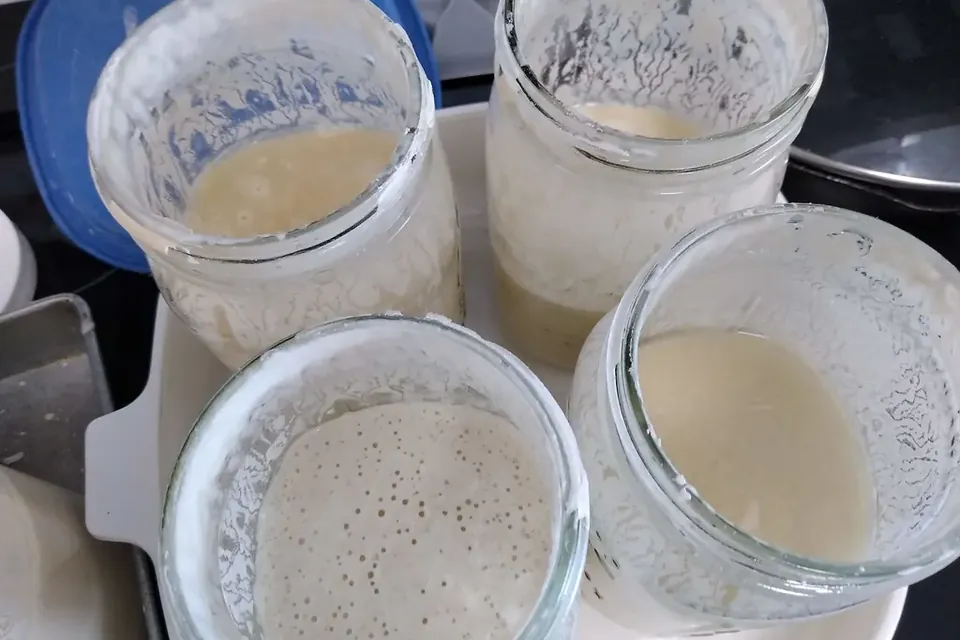
Make and keep a sourdough starter
Flour, water, a jar and about a week: a day-by-day method, signs of readiness and fixes for a sluggish culture.
 Recipes
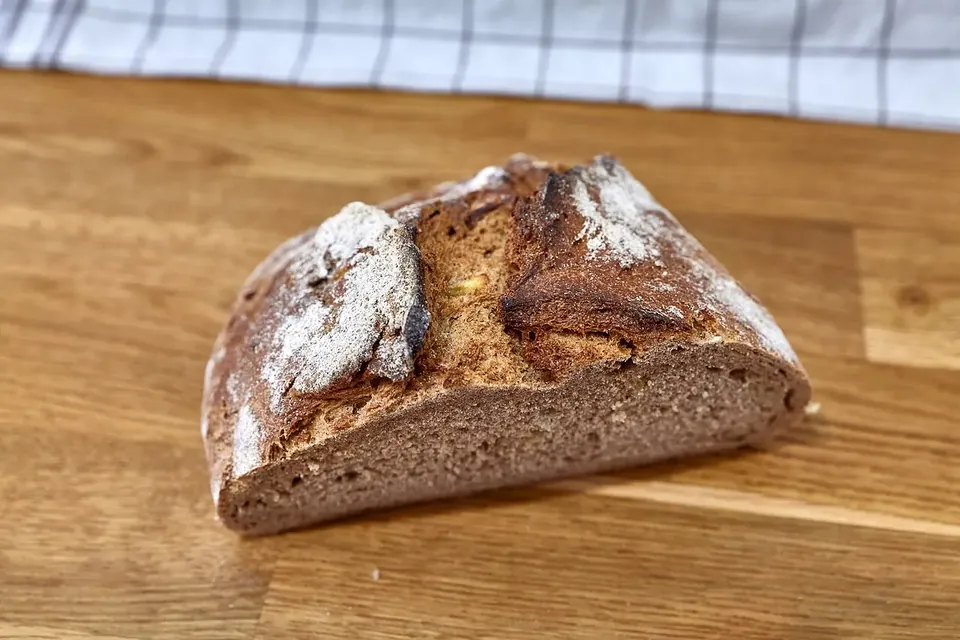
Rye levain loaf
A rye sour, a sticky dough and a loaf tin: a tangy, moist sandwich loaf in the northern European tradition.
 Bread & levain
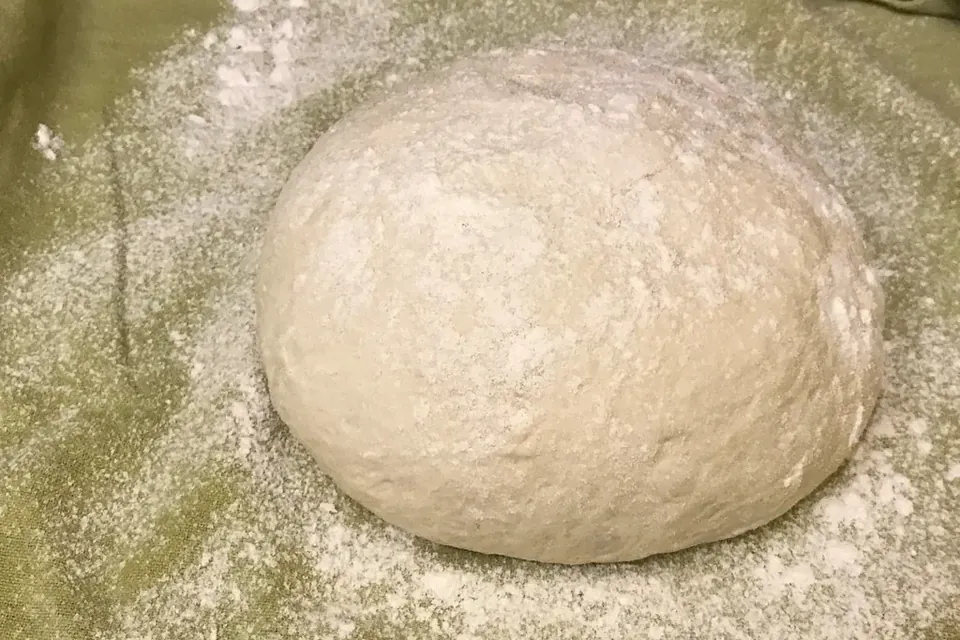
Levain in a cold winter kitchen
Desired dough temperature, warm spots that are safe, and how to stretch or shorten fermentation when the house is at 65°F.