Northeast Minneapolis: Mill Workers, Immigrant Churches, a Brewery and the Food Culture of "Nordeast"
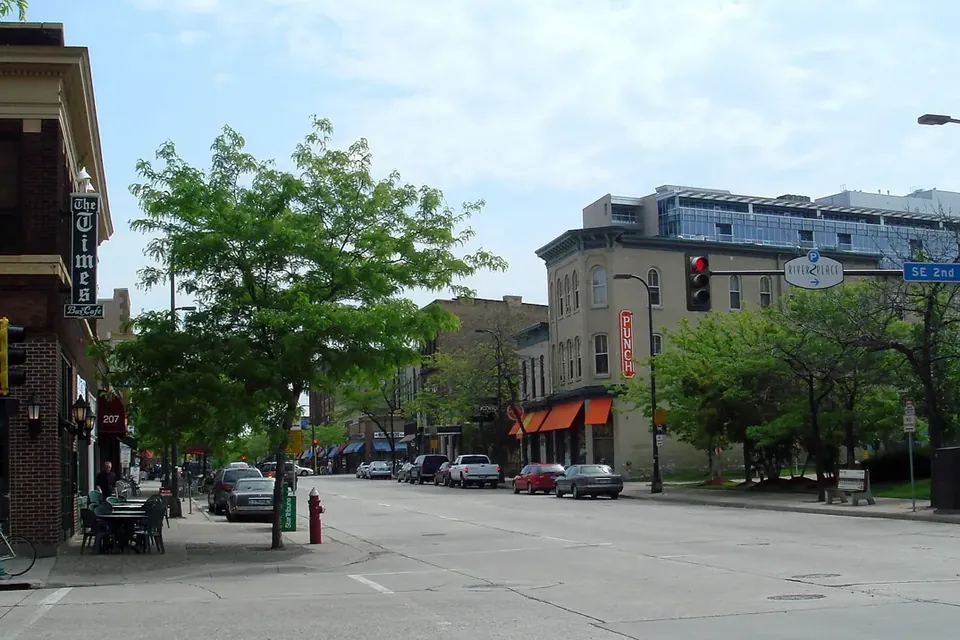
Across the Mississippi from downtown, Northeast Minneapolis has a character all its own: onion domes and steeples a few blocks apart, small corner bars, old brick factories turned into studios, and a local nickname, "Nordeast", that echoes the accents of the families who settled there. Its food culture grew out of its history as a neighbourhood of mill and rail workers from across Europe.
From St. Anthony to Northeast
The first town at the falls was St. Anthony, on the east bank, platted in the 1840s and 1850s. Minneapolis grew on the west bank, and in 1872 the two merged into one city. The east-bank neighbourhoods closest to the river became home to the people who worked in the sawmills and flour mills around the falls, in the rail yards and in the factories that followed. Our guide to the Mill District tells the story of the mills themselves.
Officially, Northeast is one of the city's eleven communities, made up of thirteen neighbourhoods, among them Sheridan, St. Anthony West, Holland, Logan Park, Audubon Park and Windom Park. Locally, the whole area is simply "Northeast", and the habit of writing it "Nordeast" is a joke at the expense of the Eastern European and Scandinavian accents once common there.
Churches as neighbourhood centres
Immigrants built churches first, and the churches organised much of community life, from schools to choirs to the parish suppers that are still a Northeast tradition. The Minnesota Historical Society's MNopedia entry on the Ukrainian American community in Northeast Minneapolis records that the first Ukrainians reached Minnesota in 1878, settling in Northeast and working in the mills. It lists a string of congregations founded over the following decades, including St. Constantine's Ukrainian Catholic Church, built at Sixth and University avenues in 1913, and St. Michael's Ukrainian Orthodox Church, formed in 1925. The Polish community built Holy Cross, and Slovak, Lebanese and Italian families founded parishes of their own.
Waves of arrivals continued well into the twentieth century. MNopedia notes that after the Second World War hundreds of Ukrainians came to the Twin Cities from displaced persons camps, and further immigration followed the end of the Soviet Union in 1991. A Ukrainian American Community Center, founded in 1964, is based on Main Street Northeast.
A brewery town
Beer was part of the neighbourhood's economy. According to the City of Minneapolis landmark record, four small breweries merged in 1890 to form the company that became known by its best-selling beer, Grain Belt. Its brewhouse at 1220 Marshall Street NE, designed by Frederick Wolff and William Lehle in an eclectic Richardsonian Romanesque style, was built in 1891–1892. The company survived Prohibition by making soft drinks and non-alcoholic beer, but closed in 1975 as national brewers came to dominate the market. The city bought the threatened complex, designated it a landmark in 1977, and it now houses offices, event space and a library. The beer brand itself lives on, brewed elsewhere in Minnesota.
Since the 2010s, a newer generation of small breweries and taprooms has opened in Northeast's old industrial buildings, helped by a 2011 change in Minnesota law that allowed breweries to sell their own beer by the glass on site.
What Northeast eats
The food culture of an immigrant working-class neighbourhood is practical: sausages and smoked meats, rye and wheat breads, pierogi and pyrohy (filled dumplings), cabbage rolls, poppy-seed and nut rolls at holiday time, and food sold at church festivals and bake sales to raise money for the parish. MNopedia singles out one long-running example: a sausage and deli business founded by the Ukrainian immigrants Wasyl and Anna Kramarczuk, known for its meats, breads and filled pastries. Lebanese families who settled in Northeast in the early twentieth century added their own bakeries and grocers.
Recent decades have added Mexican and other Latin American, East African and Asian kitchens, along with restaurants that came with the arts district. Because restaurants open and close often, Lake & Loaf does not list or rate them; instead, wander the commercial streets, especially Central Avenue, University Avenue, Hennepin Avenue East and 13th Avenue NE, and check each business's website for current hours.
Markets, art and when to visit
The Northeast Minneapolis Farmers Market runs on Saturday mornings in season; for 2026, local listings gave a season from 9 May to 10 October at 629 2nd Street NE, with indoor markets on the first Sunday of the month in winter. Our farmers market guide lists other markets across the Twin Cities.
The Northeast Minneapolis Arts Association organises the area's open-studio events in its converted warehouses, which bring large crowds to the neighbourhood's food and drink spots; check its calendar for dates.
A short walk
- Start at the Grain Belt brewhouse on Marshall Street NE and look at its brick and stone details.
- Walk east along 13th Avenue NE, one of the neighbourhood's busiest restaurant streets.
- Continue to University Avenue and the church spires around Sixth Street NE.
- Finish on Central Avenue, the main commercial street of the eastern side.
Getting there
Northeast is a short bus ride or bike ride from downtown across the Hennepin Avenue, Central Avenue or Broadway bridges. Several Metro Transit routes cross the area; our guide to getting around without a car has the regional picture.
Sources
- Minnesota Historical Society, MNopedia: Ukrainian American Community, Northeast Minneapolis.
- City of Minneapolis, Heritage Preservation: Grain Belt Brewery Brewhouse.
- Hennepin History Museum: The origins and early years of the Minneapolis Brewing Company.
- Northeast Minneapolis Arts Association.
 Neighbourhoods
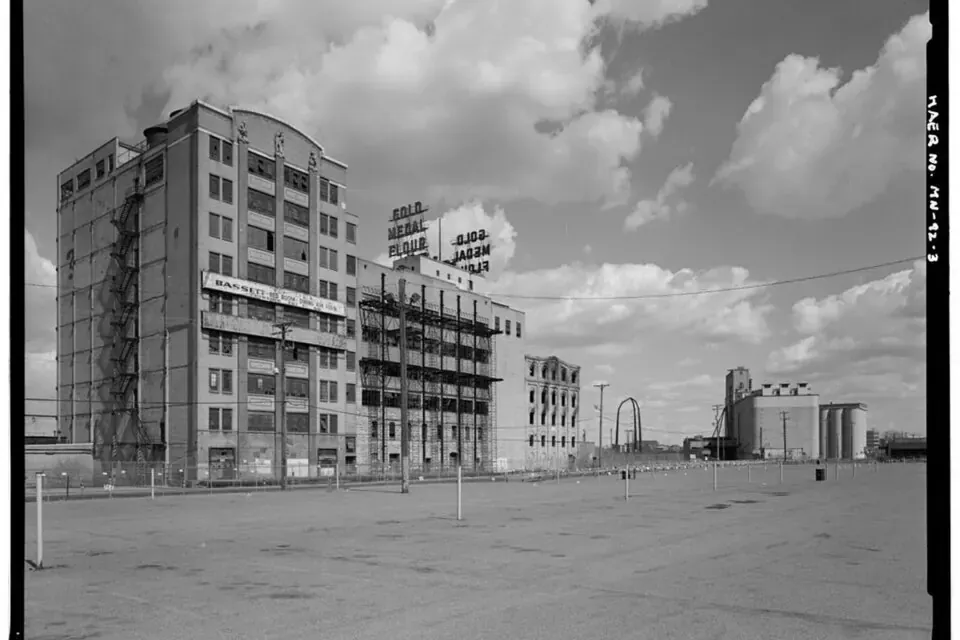
Mill City: how flour built Minneapolis
From the 1878 Washburn A Mill explosion to the Mill City Museum: the flour story behind the city's riverfront.
 Neighbourhoods
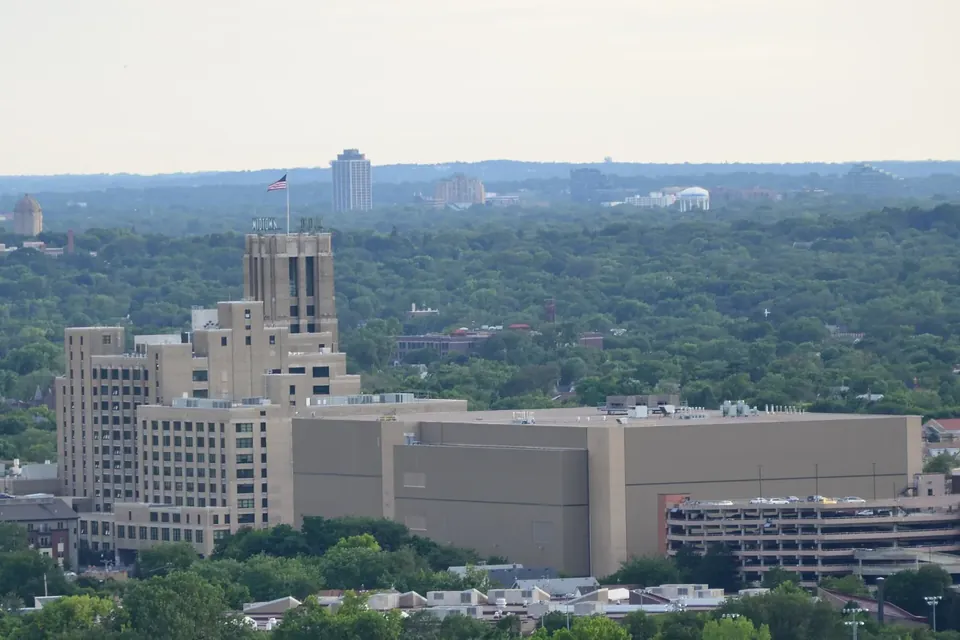
Lake Street, a city-wide food corridor
A streetcar spine, a 1928 Sears building reborn as a public market, and the immigrant businesses that define it today.
 Markets & seasons
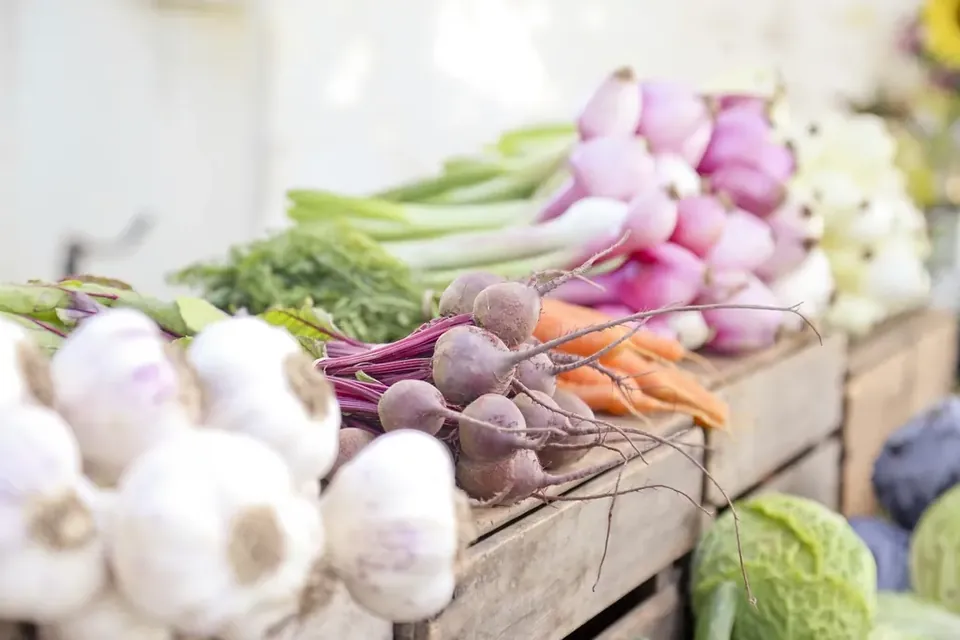
Twin Cities farmers markets, 2026
The big markets and the neighbourhood ones, with their published 2026 days, hours, addresses and winter schedules.