Mill City: How Flour Built Minneapolis, and Where to See the Mills Today
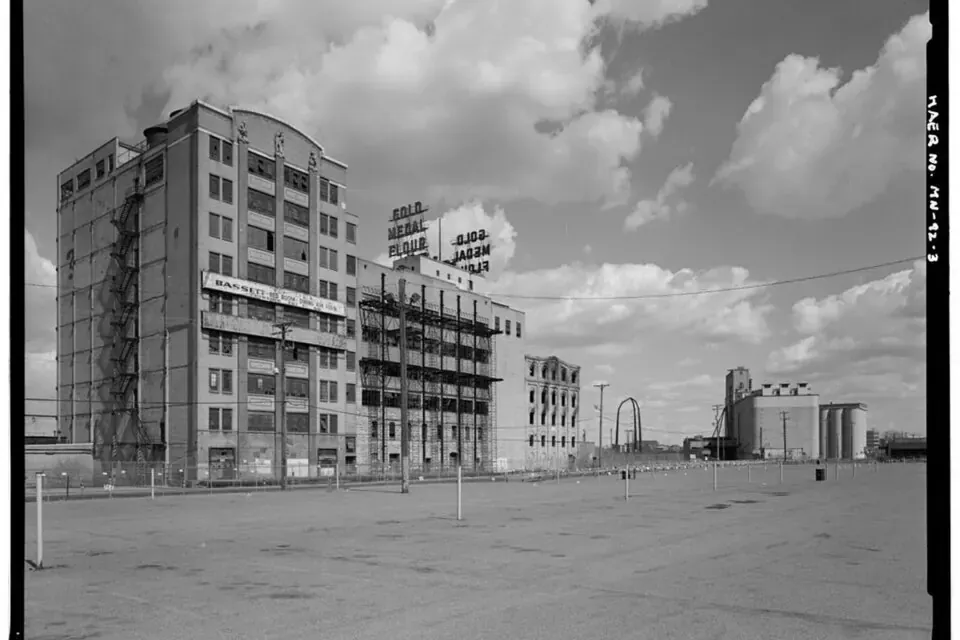
Before Minneapolis was known for lakes, it was known for flour. For about half a century, the mills clustered around St. Anthony Falls on the Mississippi made the city one of the largest flour-milling centres in the world. The ruins and restored buildings of that industry now form the Mill District, one of the best places in the Twin Cities to understand where the bread on your table comes from.
Why the mills were here
A flour mill needs three things: grain, power and a way to ship the product. Minneapolis had all three. The waterfall at St. Anthony gave a reliable head of water that could be channelled through canals and tailraces to turn mill wheels and, later, turbines. The farmland to the west and north, especially the Red River Valley and the Dakotas, grew wheat in huge quantities from the 1870s onwards. And railroads, built rapidly in the same decades, carried grain in and flour out to the East Coast and Europe.
The falls also shaped two cities. The settlement of St. Anthony grew on the east bank and Minneapolis on the west; the two merged in 1872. The milling district on the west bank, and the workers' neighbourhoods across the river that our guide to Northeast Minneapolis describes, both trace back to this stretch of river.
The Washburn A Mill and the 1878 explosion
Cadwallader C. Washburn opened the Washburn A Mill on the river in 1874. According to the Minnesota Historical Society, which runs the site today, it was one of the largest mills of its time. Four years later, on 2 May 1878, fine flour dust suspended in the air ignited. The explosion levelled the mill, killed 18 people and destroyed much of the surrounding riverfront business area. Minneapolis's milling capacity was cut roughly in half in one evening.
The disaster changed how mills were built. Washburn hired the Austrian engineer William de la Barre, who designed the replacement around ventilation and dust collection, taking a mill in Budapest as a model. The new Washburn A Mill, completed in 1880, was described by the Historical Society as the largest and most technologically advanced mill in the world at the time. Dust control is still a basic safety rule in any flour mill or bakery, and the 1878 explosion remains a textbook case in industrial safety courses.
New process, new flour
Minnesota's farmers grew mostly spring wheat, sown in spring and harvested in late summer, because winters were too harsh for autumn-sown varieties. Spring wheat is hard and high in protein, which makes excellent bread flour but was difficult to mill cleanly with the old millstones: the bran shattered and darkened the flour. In the 1870s, Minneapolis millers adopted purifiers that separated bran from the coarse middlings, and later steel and porcelain roller mills, techniques developed partly in Hungary. The result was a whiter, stronger flour that bakers prized. Our guide to Minnesota wheat and flour explains why that protein still matters for a home levain loaf.
From around 1880 until 1930, Minneapolis led the United States in flour production, and the companies that grew up around the falls became household names across the country. The Historical Society's Mill City Museum covers that corporate history in detail.
Decline, fire and a museum
A fire in 1928 gutted the Washburn A Mill's mostly wooden interior; it was rebuilt with concrete floors and kept producing flour for another 35 years. By the 1960s, changes in freight rates, tariffs and energy technology had moved the industry elsewhere, closer to where grain was grown or where flour was consumed. The Washburn A Mill closed in 1965. It was added to the National Register of Historic Places in 1971 and named a National Historic Landmark in 1983.
In February 1991 a second fire destroyed most of what remained. The city cleared the rubble and stabilised the walls, and the Minnesota Historical Society built a museum inside the ruins. Mill City Museum opened in September 2003. Its glass-fronted interior sits within the blackened limestone shell of the old mill, and the rooftop deck looks over the falls and the Stone Arch Bridge.
Walking the Mill District today
The area around the museum is now a mix of apartments, offices, theatres and parks. A loop of a mile or two covers the essentials:
- Mill City Museum, 704 South 2nd Street. Check the Historical Society's site for current opening days and admission.
- Mill Ruins Park, below the museum, where the excavated tailraces and foundations of earlier mills are exposed. It is part of the Minneapolis park system.
- The Stone Arch Bridge, a former railway bridge completed in 1883 and now open to people on foot and bike, with views of the falls and the lock.
- St. Anthony Falls itself, and the Upper St. Anthony Falls Lock, part of the Mississippi National River and Recreation Area managed by the National Park Service.
- The east bank, across the bridge, where the older St. Anthony riverfront and Nicollet Island have their own historic streets.
On summer Saturdays, the Mill City Farmers Market sets up beside the museum at 750 South 2nd Street, and in winter it moves inside the museum lobby on selected Saturdays. Our farmers market guide has its published 2026 schedule.
Bread connections
It is fitting that a city built on flour has a strong home-baking culture. If the museum's milling exhibits make you want to bake, start with our explanation of what levain is and our country levain loaf recipe, which uses ordinary bread flour of the kind these mills once made by the trainload.
Flour dust and raw flour
The 1878 explosion is a reminder that flour dust is flammable in enclosed spaces, which is why mills control dust. In a home kitchen the practical safety point is different: raw flour can carry bacteria such as E. coli, so the US Food and Drug Administration advises against eating raw dough or batter. See the FDA's guidance on raw dough.
Sources
- Minnesota Historical Society: History of the Washburn A Mill building; Mill City Museum.
- National Park Service: Mississippi National River and Recreation Area.
- Mill City Farmers Market: location and season.
- US Food and Drug Administration: Handling flour safely.
 Bread & levain
Minnesota wheat and flour
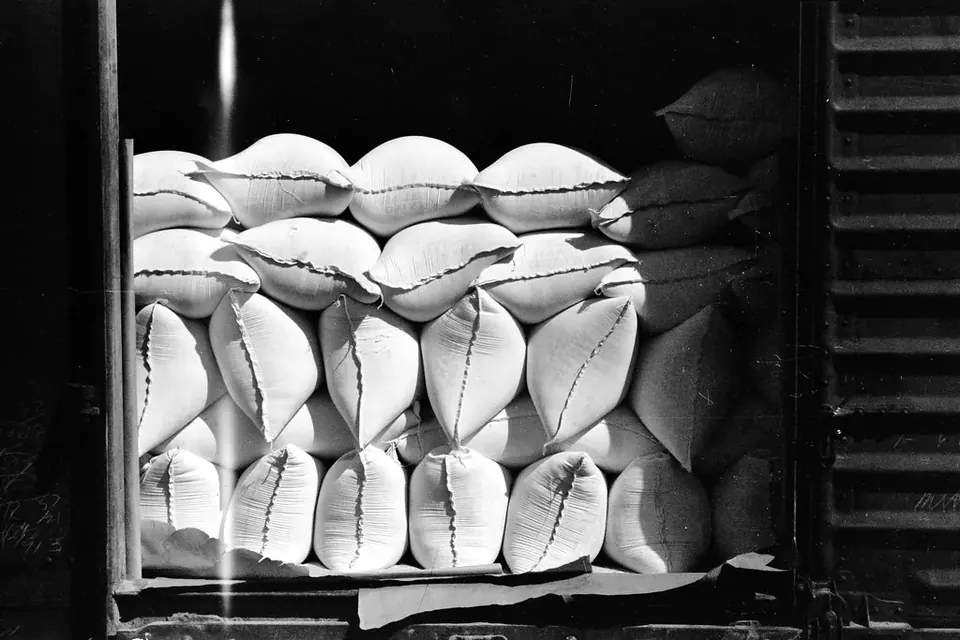
Spring wheat, protein percentages, whole grain and Kernza: how to read a bag of flour before you bake.
 Neighbourhoods
Northeast Minneapolis, or "Nordeast"
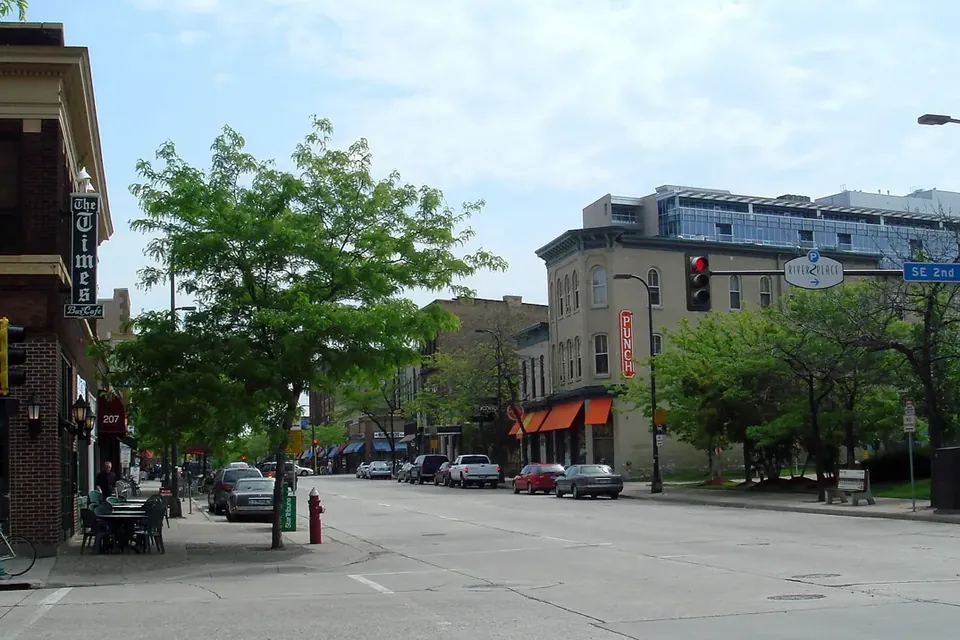
Old St. Anthony, immigrant parishes, a Romanesque brewhouse and a long tradition of sausages, breads and church suppers.
 Bread & levain
What is levain?
Starter, levain, sourdough: what the words mean, what the microbes do and why the bread tastes the way it does.