Lake Street, Minneapolis: A Food Corridor Shaped by Streetcars, a Sears Tower and New Arrivals
Lake Street runs across south Minneapolis from the lakes in the west to the Mississippi in the east, and on to Saint Paul as Marshall Avenue. Over more than a century it has been a streetcar line, a car-dealer strip, a retail hub anchored by a giant Sears store, and, since the 1990s, one of the most varied food streets in the Upper Midwest, built in large part by immigrant entrepreneurs.
A street built by transit
Like many Minneapolis commercial streets, Lake Street took its shape from the streetcar. As lines extended south from downtown in the late nineteenth century, a cross-town route along Lake Street linked them together, and shops, banks, theatres and offices filled the frontages. After the streetcars stopped in 1954, the street adapted to the car, with dealerships and drive-ins, and then struggled as retail moved to suburban malls.
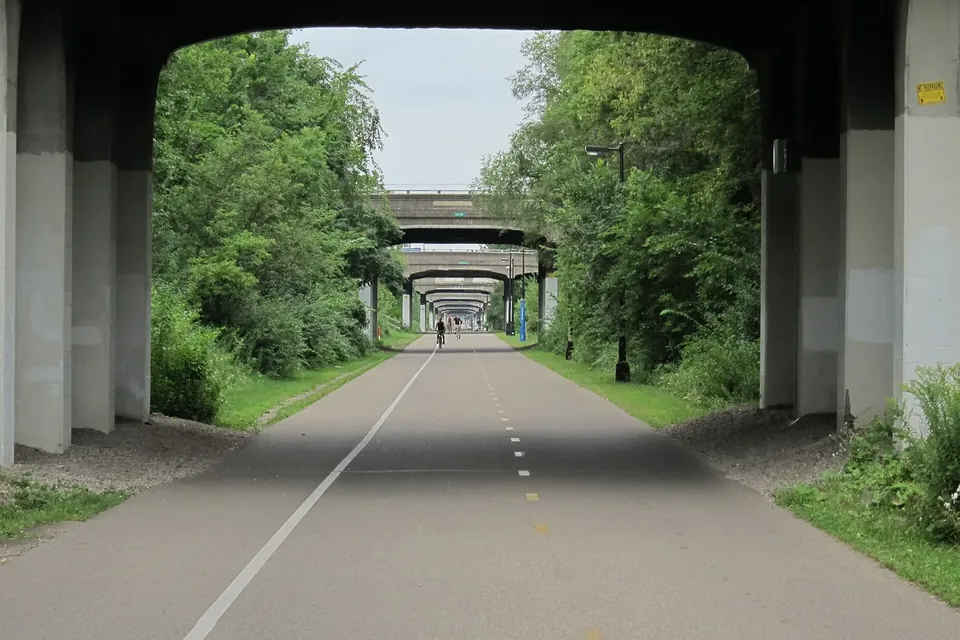
Running parallel a block to the north is a reminder of the area's industrial past: a sunken railway corridor that carried freight along 29th Street. Converted into the Midtown Greenway, it is now one of the busiest bike and walking routes in the city, and an easy way to reach Lake Street's food businesses without a car.
The Sears building and the Midtown Global Market
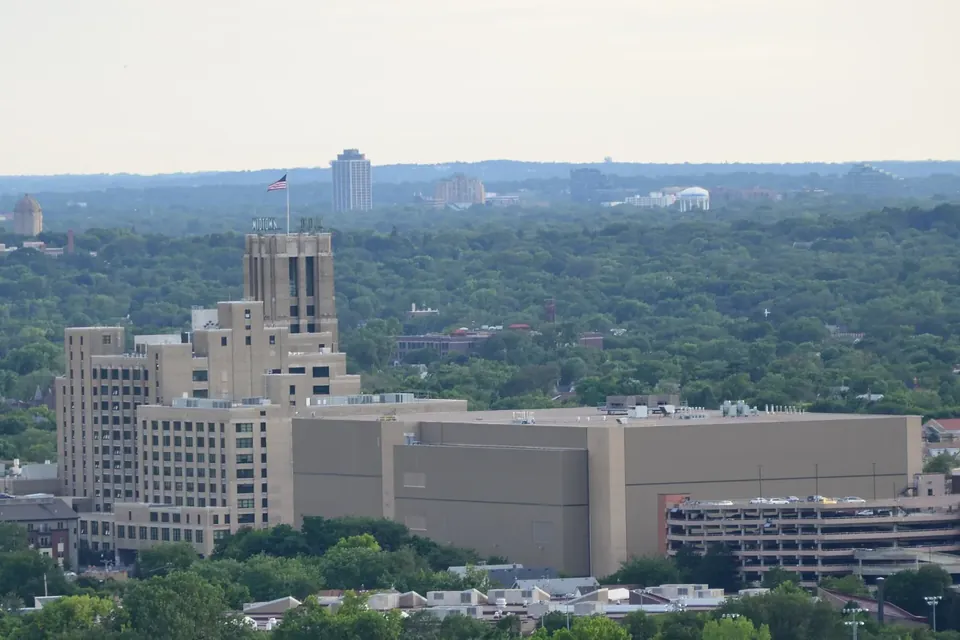
The largest building on the corridor is hard to miss. It was built in 1928 as a Sears, Roebuck and Co. retail store and mail-order warehouse, with a tower visible for miles. Sears left in 1994 and the building stood empty for about a decade. A public-private redevelopment involving the City of Minneapolis converted it into the Midtown Exchange, which opened in 2006 with offices, housing, a hotel and, on the ground floor, the Midtown Global Market.
The market was conceived as a public marketplace for small, locally owned food businesses, many of them run by immigrant families, alongside grocers and specialty shops. It is a good introduction to the corridor because so many cuisines sit under one roof. Vendors change over time, so check the market's own directory for who is there now.
Immigrant businesses and the modern corridor
From the 1990s, Lake Street became a gateway for new Minnesotans. Mexican and Central American families opened groceries, bakeries (panaderías), taquerías and markets, especially around Bloomington and Chicago avenues, where indoor marketplaces of small shops took root. Somali and other East African businesses, Southeast Asian restaurants and grocers, and long-standing Scandinavian and other European shops sit along the same stretch. The Lake Street Council, the corridor's business association, describes the street as one of the most diverse commercial districts in the state.
The corridor also has a farmers market of its own. The Midtown Farmers Market, run by a neighbourhood association, meets on Saturday mornings in season; for 2026, local listings gave its location as 2225 East Lake Street. See our farmers market guide for the larger markets.
Damage and rebuilding after 2020
In late May 2020, after the murder of George Floyd by a Minneapolis police officer, protests and unrest left many buildings along Lake Street damaged or destroyed, among them a large number of small, immigrant-owned businesses. In the years that followed, the Lake Street Council, neighbourhood groups, local foundations and city and state programmes raised and distributed funds for rebuilding. Some businesses reopened in their old locations, some moved, and some did not return. Rebuilt and new buildings now stand alongside empty lots that are still being redeveloped, so the corridor is a place where recent history is visible on almost every block.
Getting there: the B Line and the Greenway
On 14 June 2025, Metro Transit opened the METRO B Line, a bus rapid transit route that runs mainly along Lake Street and Marshall and Selby avenues between the western edge of Minneapolis and downtown Saint Paul. It replaced Route 21, the region's busiest local bus route, and connects with the Blue Line light rail at Lake Street/Midtown station and with the Orange Line on Interstate 35W. With stations every few blocks, it makes a food crawl along the corridor straightforward. Our guide to getting around the Twin Cities without a car covers fares and other lines.
A Lake Street food walk
- Start at the Midtown Global Market (Chicago Avenue and Lake Street) for a broad sample of cuisines.
- Walk or ride the B Line east to Bloomington Avenue for Latino bakeries, groceries and markets.
- Continue east towards Hiawatha Avenue and the Blue Line, or take the Greenway back west by bike.
- Check each business's own website or posted hours before you go: many are small family operations.
Why it matters for a food guide
Lake Street shows how a city's food culture is built: not by a single famous restaurant but by hundreds of small businesses, markets and bakeries serving the people who live nearby. If you are new to Minneapolis, a few Saturday mornings on Lake Street will teach you more about the city than any ranking could.
Sources
- Metro Transit: METRO B Line.
- Midtown Global Market: history and vendor directory.
- Lake Street Council: corridor history and rebuilding.
- Midtown Greenway Coalition.
- Minnesota Historical Society, MNopedia: articles on Minneapolis neighbourhoods and immigration.
 Living here
Getting around without a car
Light rail, the new bus rapid transit lines, the Greenway and the Grand Rounds: how to reach the Twin Cities' food streets car-free.
 Neighbourhoods
Northeast Minneapolis, or "Nordeast"
Old St. Anthony, immigrant parishes, a Romanesque brewhouse and a long tradition of sausages, breads and church suppers.
 Markets & seasons
Twin Cities farmers markets, 2026
The big markets and the neighbourhood ones, with their published 2026 days, hours, addresses and winter schedules.