Minneapolis Snow Emergency Parking Rules: Day 1, Day 2 and Day 3 Explained
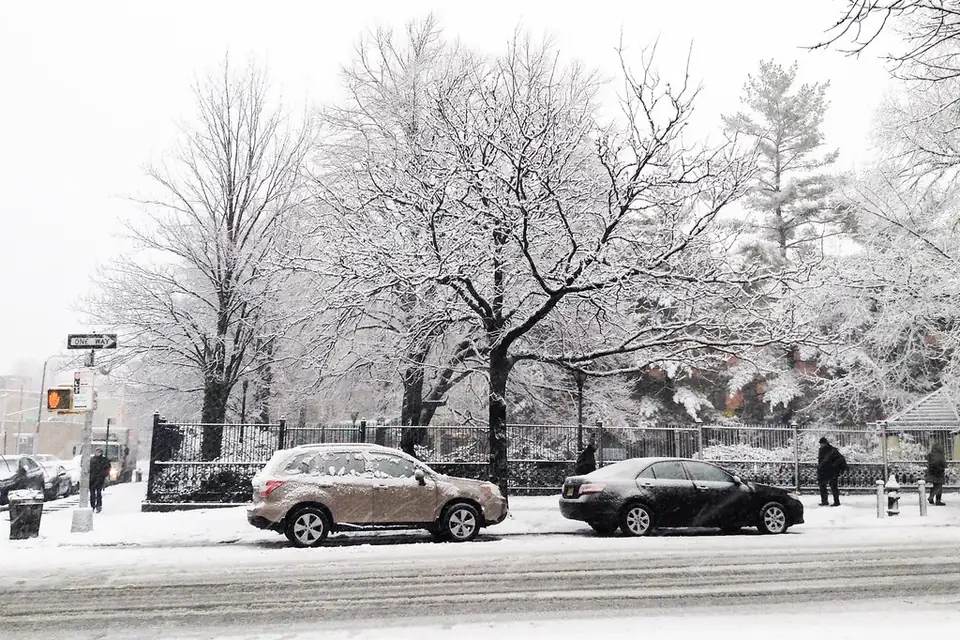
The first snow emergency of the winter catches out new arrivals every year. Minneapolis clears its streets in a three-day sequence, and each day bans parking on a different set of streets. Leave your car in the wrong place and it can be ticketed and towed. Here is how the system works, how to read the signs, and what changes if you live across the river in Saint Paul.
Rules on this page are summarised from the City of Minneapolis and City of Saint Paul websites as consulted in October 2026. Cities revise their snow procedures from time to time; the city's own page and alerts are the authority for any given storm.
What a snow emergency is
After a significant snowfall, the City of Minneapolis can declare a snow emergency. The declaration does not mean danger; it switches on temporary parking rules so that plow crews can clear streets from kerb to kerb rather than steering around parked cars. The rules run over three days, and each day's restrictions last until a street has been fully plowed.
The city defines a fully plowed street as one that is completely clear of snow and plowed as wide as possible. Once a street is in that state you may park on it even while the emergency is still in effect, but the city warns that crews can pass more than once, so a street that looks done may not be.
Day 1: snow emergency routes
Day 1 rules start at 9 p.m. on the day the emergency is declared. You may not park on either side of a snow emergency route. These are the main streets plowed first. You may park on either side of parkways and of streets that are not snow emergency routes.
How to recognise a route: snow emergency routes carry red "Snow Emergency Route" signs and blue street-name signs. Streets that are not routes have green or brown street-name signs. If you are unsure, the city's online street lookup shows the rule for any block.
Day 2: the even side, and parkways
Day 2 rules start at 8 a.m. the next morning. You may not park on the even-numbered side of non-route streets, or on either side of a parkway. You may park on the odd-numbered side of non-route streets and on both sides of snow emergency routes, which were plowed on Day 1.
The city's advice is to move your car from the odd side to the even side between 8 p.m. and 8 a.m., before Day 3 begins, provided the even side has been plowed.
Day 3: the odd side
Day 3 rules start at 8 a.m. You may not park on the odd-numbered side of non-route streets until they are fully plowed. You may park on the even side of those streets, and on both sides of snow emergency routes and parkways.
Which side is "even"?
Look at the house numbers. A side whose addresses end in 0, 2, 4, 6 or 8 is the even side; 1, 3, 5, 7 or 9 is the odd side. On a block with no addresses, the city suggests asking neighbours or local businesses, using the street lookup map, or calling 311.
| Day | Rules begin | No parking | You may park |
|---|---|---|---|
| Day 1 | 9 p.m. on the day declared | Both sides of snow emergency routes | Parkways; both sides of non-route streets |
| Day 2 | 8 a.m. the next day | Even side of non-route streets; both sides of parkways | Odd side of non-route streets; snow emergency routes |
| Day 3 | 8 a.m. the day after | Odd side of non-route streets | Even side of non-route streets; routes; parkways |
Source: City of Minneapolis, snow emergency parking rules, consulted October 2026.
How to find out an emergency has been declared
The City of Minneapolis recommends signing up for at least two kinds of alert, because a single text can be missed on a busy evening. Options the city lists include:
- text alerts (the city's bulletins ask residents to text MPLSAlerts to 77295);
- the city's parking app notifications;
- the snow emergency hotline, 612-348-SNOW (7669), which gives the day's rules in English, Spanish, Somali and Hmong;
- a banner on the city's website, the city's social media accounts, local TV and radio, and 311.
Printed versions of the rules are also published in Spanish, Hmong, Somali, Lao and Oromo.
If your car is towed
The city states plainly that following the rules is how you avoid a ticket and a tow. Towed vehicles go to the city impound lot, and the city provides an online vehicle search to find out whether your car has been taken there. Fees change, so check the impound lot's current charges with the city rather than relying on figures you read elsewhere.
Sidewalks are your job too
Snow emergencies cover streets, but Minneapolis also requires property owners to clear the public sidewalk next to their property. Under the city's sidewalk rules, owners of single-family homes and duplexes have 24 hours after snow stops falling; all other properties have four daytime hours (8 a.m. to 5 p.m.). Sidewalks must be cleared to bare pavement across their full width, corner properties must clear the kerb ramps, and snow may not be pushed into the street or alley. If an inspection finds a sidewalk still uncleared, the city can clear it and bill the owner, and unpaid bills can be added to property taxes. If you rent, your lease should say whether you or the landlord is responsible; our guide to renting in Linden Hills and other Minneapolis neighbourhoods lists what to ask before signing.
Saint Paul works differently
Saint Paul runs a two-stage system, according to the City of Saint Paul's snow emergency information:
- Night plow routes: parking is banned from 9 p.m. on the day the emergency is declared. These streets carry signs, and the city says they are usually finished by 7 a.m. the next morning. All of downtown Saint Paul is treated as a night plow area even where it is not signed.
- Day plow routes: every street without a night plow sign. Parking is banned from 8 a.m. the day after the declaration; the city says these streets are usually completed by 5 p.m.
Saint Paul says cars not parked according to the rules can be ticketed and towed for up to 96 hours after a snow emergency takes effect. Those finishing times are estimates: after heavy snow, the city has warned that night plow routes may run late into the morning.
A winter routine that works
- Learn whether your block is a snow emergency route before the first storm, not during it.
- Sign up for two alert channels and save the hotline number in your phone.
- If you have no off-street parking, scout a fallback spot (a friend's driveway, a ramp, a street plowed on Day 1) for Day 2 and Day 3.
- Keep a shovel, a brush and a scraper in the car, and allow extra time on mornings after a declaration.
- Consider leaving the car altogether for a few days: buses and light rail keep running in winter, and our guide to getting around the Twin Cities without a car explains the network.
Sources
- City of Minneapolis, Snow emergency parking rules, consulted October 2026.
- City of Minneapolis, Sidewalk snow clearing rules, consulted October 2026.
- City of Minneapolis, snow emergency updates and alert sign-up; snow emergency news bulletins (2025).
- City of Saint Paul, Snow emergency information and snow emergency brochure, consulted October 2026.
 Living here
Renting in Linden Hills and beyond
Rental licences, deposits, notice rules, Census rent figures and transit: the checks to make before signing a Minneapolis lease.
 Living here
Getting around without a car
Light rail, the new bus rapid transit lines, the Greenway and the Grand Rounds: how to reach the Twin Cities' food streets car-free.
 Bread & levain
Levain in a cold winter kitchen
Desired dough temperature, warm spots that are safe, and how to stretch or shorten fermentation when the house is at 65°F.